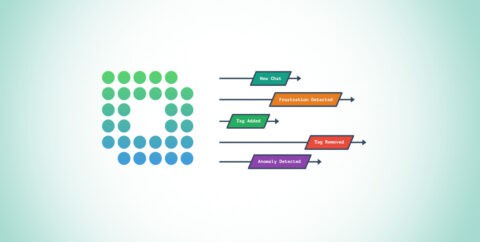
Building an Events API: Choosing the Best of 6 Options on AWS
Learn how we evaluated EventBridge, Kinesis, SNS, and SQS FIFO to build a secure, ordered, multi-tenant events API architecture on
Most contact centres are not short of data. They have dashboards tracking call volume, average handle time, service levels, CSAT scores, and first contact resolution rates. Reports go out weekly. Numbers are reviewed in team meetings. Targets are set and monitored. And yet, for many contact centre leaders, there's a persistent sense that the reporting…


Most contact centres are not short of data. They have dashboards tracking call volume, average handle time, service levels, CSAT scores, and first contact resolution rates. Reports go out weekly. Numbers are reviewed in team meetings. Targets are set and monitored.
And yet, for many contact centre leaders, there’s a persistent sense that the reporting isn’t actually answering the most important questions. The metrics describe what happened. They’re much less useful at explaining why, or at predicting what’s coming next.
Speech analytics changes the nature of contact centre reporting. Not by replacing the metrics teams already track, but by adding a layer of intelligence that connects operational data to the conversations it came from. This article covers the metrics that matter most in speech analytics reporting, and the insight gaps that traditional reporting almost always leaves open.
Before getting to what speech analytics adds, it’s worth being clear about the foundation. These are the metrics that feature in most contact centre reporting, and for good reason; they’re reliable indicators of operational performance and customer experience.
These metrics matter. The problem isn’t that contact centres are tracking the wrong things. The problem is what they’re missing.
Standard contact centre reporting tells you what your operation is doing. Speech analytics reporting tells you what’s actually happening inside your customer conversations, and those two things are not the same.
According to Call Centre Helper, 45.7% of contact centres aren’t tracking customer emotion at all and they’re missing a significant layer of insight into sentiment, frustration, and the signals that often precede churn, escalation, or complaints. That’s nearly half the industry flying blind on one of the most useful indicators available.
The gaps go further than sentiment. Traditional reporting doesn’t tell you:
This is the gap speech analytics is designed to fill.
Learn more: Why Green Dashboards Hide the Real CX Story
Sentiment analysis applied across 100% of interactions gives contact centres something surveys can’t: an unfiltered, real-time read on how customers are feeling throughout their conversations, not just at the end.
This means tracking not just whether a customer was satisfied, but where in an interaction frustration emerged, whether it was resolved before the call ended, and whether certain issue types, agents, or processes are consistently generating negative emotional responses. Sentiment trends over time become a leading indicator, a way of spotting experience deterioration before it shows up in CSAT.
One of the most valuable outputs of speech analytics reporting is accurate, granular contact driver data, i.e. what customers are actually contacting about, at scale, across every interaction.
Most contact centres categorise contacts through agent wrap-up codes or IVR selections. Both are unreliable: agents choose the closest available option under time pressure, and IVR menus don’t reflect the nuance of why a customer actually called. Contact driver analysis from speech analytics removes the agent as the middleman, drawing categories directly from the language of the conversation itself.
The result is a contact reason breakdown that’s accurate, granular, and continuously updated; one of the most useful inputs available for identifying avoidable demand, improving self-service, and understanding what’s really driving volume.
Speech analytics identifies topics being discussed across your entire interaction set — not just in the calls someone happened to review. New themes that are building in volume become visible early. Recurring issues that weren’t visible in structured data surface automatically. Emerging complaints, product problems, or policy confusion can be caught before they compound.
This is especially powerful when combined with time-series reporting: the ability to see how topic volumes are trending week over week, and to be alerted when something unusual is growing.
Speech analytics reporting adds a layer of agent-level insight that sampling can never reliably provide. Across every interaction, it can track whether required disclosures were made, how consistently agents follow defined processes, where communication quality is strongest and weakest, and which behaviours consistently correlate with better or worse outcomes.
This creates reporting that’s both fairer and more actionable than sampled QA data, grounded in complete evidence rather than a handful of reviewed calls.
Speech analytics can be configured to detect and report on specific high-risk moments in conversations: language indicating a customer is considering leaving, mentions of a competitor, expressions of serious complaint intent, compliance-sensitive phrases, or indicators of vulnerability. These signals can be surfaced in near real time, rather than discovered in a weekly report after the opportunity to act has passed.
The shift speech analytics enables in reporting is about changing what reporting is for.
Traditional contact centre reporting describes performance. Speech analytics reporting explains it, connecting the numbers to the conversations that generated them, and giving teams the context to act on insight rather than react to data.
Research from MaxContact’s 2025/26 UK Contact Centre KPI Benchmarking Report found that the highest-performing contact centres consistently outperform the average across multiple KPIs, reinforcing the importance of tracking the right metrics together rather than in isolation. Speech analytics is what makes that connected view possible: linking sentiment to FCR, contact drivers to repeat rate, agent behaviour to CSAT, and operational patterns to the conversations driving them.
The contact centres getting most value from speech analytics are using it to ask better questions and to share better answers with the teams across the business who need them.
EdgeTier’s Explore is built around this model: automatically tagging and quantifying every interaction, surfacing the themes and trends that matter, and making it easy to share intelligence across support, product, compliance, and leadership.
→ Back to the full guide: What Is Speech Analytics in the Contact Centre?
Learn how we evaluated EventBridge, Kinesis, SNS, and SQS FIFO to build a secure, ordered, multi-tenant events API architecture on
Contact centres don't lack data, they lack fast answers. This guide compares the 10 best call center analytics software platforms
Most contact centres find out about a problem the same way their customers do: after it's already spread. This piece


Robert Davies
Consultant
"You’ve got an issue, but you don’t know how many people are affected. You don’t know the scale. You don’t even know if it’s real."


Debbie Duggan
Contract Manager for Customer Solutions
"We thought at the time that we were putting the customer at the fore. We thought we were doing things right. But in hindsight, we really weren’t because we had no real-time insights whatsoever into customer issues."


Vladimir Greavu
BBG Director of Customer Service
"I specifically liked the flexibility. I liked the can-do attitude. I always felt supported. There hasn’t been any single point in our journey where EdgeTier has said no."



Let us help your company go from reactive to proactive customer support.
Unlock AI Insights