Overheard at EdgeTier
Most of what we hear on customer calls is useful. Some of it is just lovely. We've rounded up the
Contact centres don't lack data, they lack fast answers. This guide compares the 10 best call center analytics software platforms in 2026, from real-time anomaly detection and full-coverage QA to enterprise speech analytics and voice-of-customer suites. Each entry includes honest pricing, genuine trade-offs, and who it's actually built for, so you can find the right…

Most contact centres aren’t short on data, but they are short on answers.
Call recordings, chat transcripts, tickets, and survey scores pile up in every channel, but by the time anyone reviews them, the moment to act on them has usually passed. QA teams sample 2-3% of calls and hope it’s representative. Ops teams find out about a broken promo code from a spike in the queue, not before it. And when leadership asks why CSAT dropped last week, the honest answer is often “we’re not sure, yet.”
Call center analytics software exists to close that gap, turning raw conversation data into insight you can act on before it becomes a bigger problem for your business, your bottom-line, or your brand. But the category is broad, and vendors solve very different parts of the puzzle. Some are built to transcribe and score calls at enterprise scale. Some are survey and feedback platforms that happen to touch contact centre data. Some are full CCaaS suites where analytics is one module among many.
Below are the 10 best call center analytics software platforms in 2026, with honest pricing, real trade-offs, and who each one actually fits.
| # | Platform | Best for | Starting price | Where it’s strongest |
| 1 | EdgeTier | Complex, multi-system contact centres that want proactive, real-time insight; with hands-on collaboration to get there and results in weeks, not months | Custom (by conversation volume) | 100% interaction coverage, real-time anomaly alerts, agentic AI querying |
| 2 | CallMiner | Large enterprises with mature compliance and QA programs | Custom, enterprise | Deep speech analytics, compliance monitoring |
| 3 | NICE CXone | Teams already running their whole contact centre on NICE | From $110/agent/mo (analytics needs the $209/mo tier) | Full CCaaS with analytics built in |
| 4 | Verint | Enterprises that want WFM, QA, and analytics under one supplier | Custom, enterprise | Workforce management + quality management |
| 5 | Observe.AI | High-volume contact centres scaling up QA coverage | Custom, enterprise | AutoQA and coaching workflows |
| 6 | Cresta | Large enterprises wanting live agent guidance during calls | Custom (typically $60K–$150K/yr) | Real-time agent assist |
| 7 | Chattermill | Brands that want to unify support tickets, surveys, and reviews | Custom, enterprise | Cross-source feedback analytics |
| 8 | SentiSum | Support teams that want ticket tagging and sentiment without voice analytics | From ~$1,000/mo | Automatic ticket categorisation |
| 9 | Level AI | Teams that need omnichannel QA scoring | Custom | QA evaluation workflows |
| 10 | Qualtrics (XM Discover) | Enterprises running formal, company-wide VoC programs | Custom (often tens of thousands/yr) | Enterprise-wide experience management |
Call center analytics software collects conversations from your contact centre (calls, chats, emails, social messages, surveys) and turns them into something a team can actually use: sentiment trends, contact-driver breakdowns, agent performance scores, compliance flags, and early warnings when something’s going wrong.
The category splits roughly into three types of vendor:
Which type fits you depends on what you’re trying to solve, and that’s really the first decision to make before comparing feature lists.
Before comparing vendors line by line, it’s worth checking each one against these:
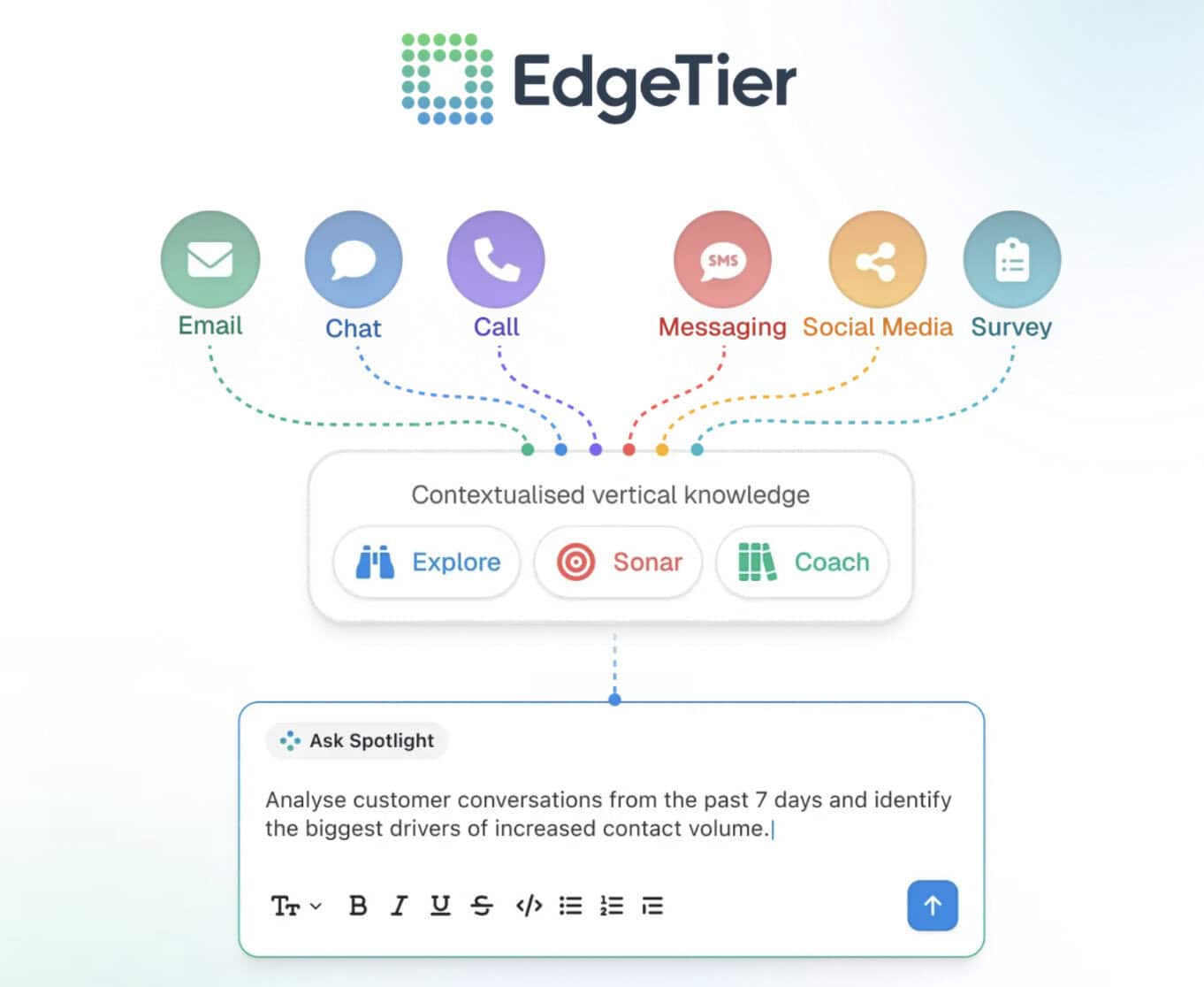
EdgeTier is contact centre analytics built specifically for teams that live and die by conversation volume; think retail, travel, iGaming, and fintech brands like Ryanair, TUI, Holland & Barrett, Abercrombie & Fitch, and CarTrawler. Rather than bolting analytics onto a phone system or a survey tool, EdgeTier reads 100% of conversations across every channel (chat, email, phone, social, and surveys) in real time, in 49+ languages, and turns them into insight the whole business can use, not just the contact centre.
That shows up as four connected products instead of one generic dashboard:
The results speak for themselves in customer case studies: TUI used EdgeTier to trace a hidden payment confirmation issue responsible for 20% of all contacts, and fixing it cut payment-related contacts by 40%, reduced overall contact volume by 7%, and saved over 100,000 agent hours a year. Across its customer base, EdgeTier reports averages of a 21% CSAT improvement, 25% reduction in chat handling time, 12% reduction in contact volume, and QA reviews running 2.5x faster. It integrates directly with Zendesk, Salesforce, LivePerson, Kustomer, Freshdesk, Intercom, and LiveAgent, and holds a 4.9 rating on Capterra and 4.5 on G2.
Best for: Contact centres in retail, travel, iGaming, utilities, communication, or fintech that want real-time anomaly detection, full-coverage QA, and conversation analytics in one platform, not three separate tools.
Worth knowing: EdgeTier is an analytics and QA layer that sits on top of your existing contact channels, not a phone system or CCaaS replacement; if you’re also shopping for a new dialer or routing platform from scratch, you’ll be integrating EdgeTier with whatever you choose there, not replacing it.
Pricing: Custom, based on conversation volume and channels – get a quote or learn more.
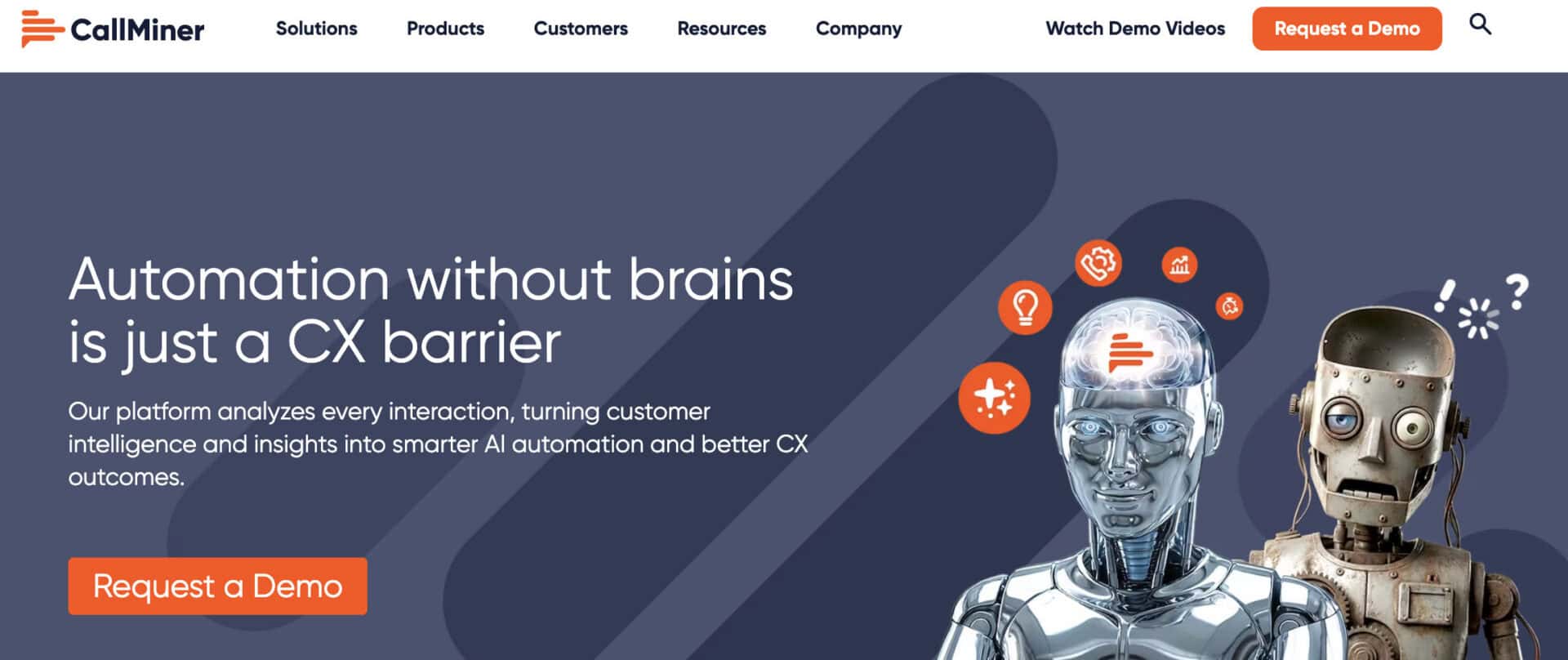
CallMiner is one of the longest-standing names in speech analytics, and its Eureka engine is built for enterprises with mature compliance and QA requirements. It analyses voice and digital interactions for sentiment, topics, customer intent, and compliance risk, and CallMiner Coach extends that into structured coaching workflows.
Best for: Large enterprises with dedicated compliance and analytics teams already running structured QA programs.
Worth knowing: Reviewers commonly cite a long rollout, averaging around five months to full deployment, and a real learning curve. It’s also built primarily around its own conversation data rather than as a unifying layer across separate CRM, survey, and workforce systems, so cross-system reporting takes extra integration work.
Pricing: Custom, enterprise-quoted.
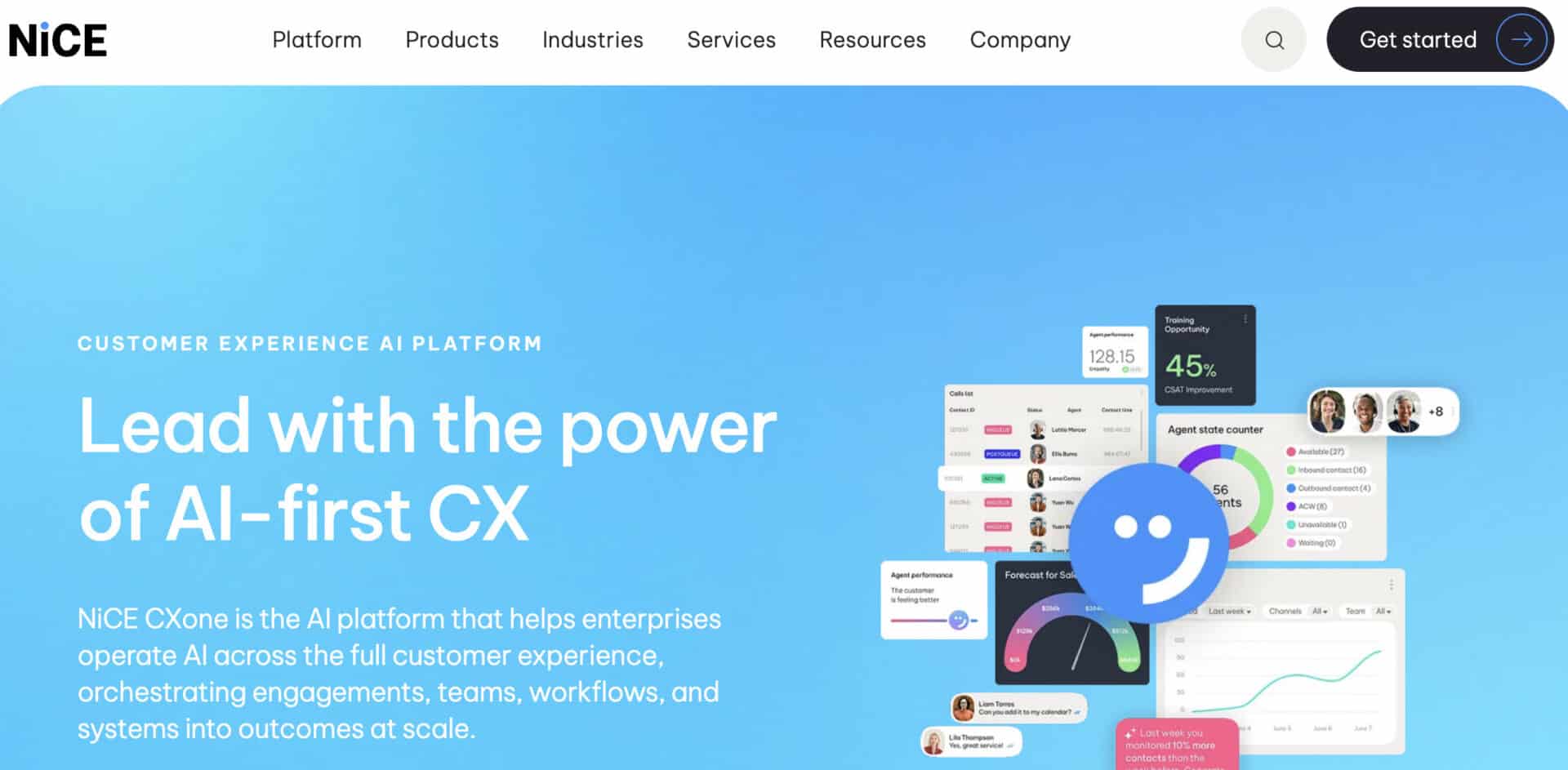
NICE CXone is a full cloud contact centre platform (CCaaS) with analytics, including its Enlighten AI engine and CXone Mpower Orchestrator, built into the same environment as routing, workforce management, and automation. For a team already standardised on NICE, that means one vendor for the whole stack.
Best for: Contact centres that want to run their entire operation (not just analytics) inside a single, full-stack CCaaS platform.
Worth knowing: NICE’s published packages start at $110/agent/month, but that entry tier doesn’t include Interaction Analytics; the actual analytics capability this list is about is only bundled in from the $209/agent/month Complete Suite upward (it’s a paid add-on below that). Analytics here are also built for the NICE ecosystem specifically, so the value is highest if NICE is (or will be) your core phone/chat system, not just your analytics layer.
Pricing: Published packages start at $110/agent/month, rising to $249/agent/month + $0.25/session for the top tier; Interaction Analytics is included from $209/agent/month (Complete Suite) or available as an add-on below that.
Verint combines workforce management, quality management, and speech/interaction analytics under one roof, with tools like Quality Bot for automated scoring and Data Insights Bot for surfacing trends and anomalies. It’s a strong fit for enterprises that manage forecasting, staffing, and QA as one connected discipline.
Best for: Large, established contact centres that want workforce planning and quality management running alongside analytics, from the same supplier.
Worth knowing: Verint’s value is closely tied to adopting the wider Verint product suite rather than as a lightweight, standalone analytics layer; teams wanting just conversation analytics without the workforce management side may find it more platform than they need.
Pricing: Custom, enterprise-quoted.
Observe.AI is a contact centre intelligence platform built specifically around quality assurance and coaching. Its AutoQA scores 100% of interactions rather than a manual sample, and it identifies customer intent and coaching moments directly from conversation data.
Best for: High-volume contact centres that want to move QA from small manual samples to full, automated coverage.
Worth knowing: Transcription accuracy is the single most common complaint in reviews, particularly with strong accents, noisy audio, or non-English languages; worth testing directly against your own call data before committing, especially if you operate in multiple markets.
Pricing: Custom, enterprise-quoted.
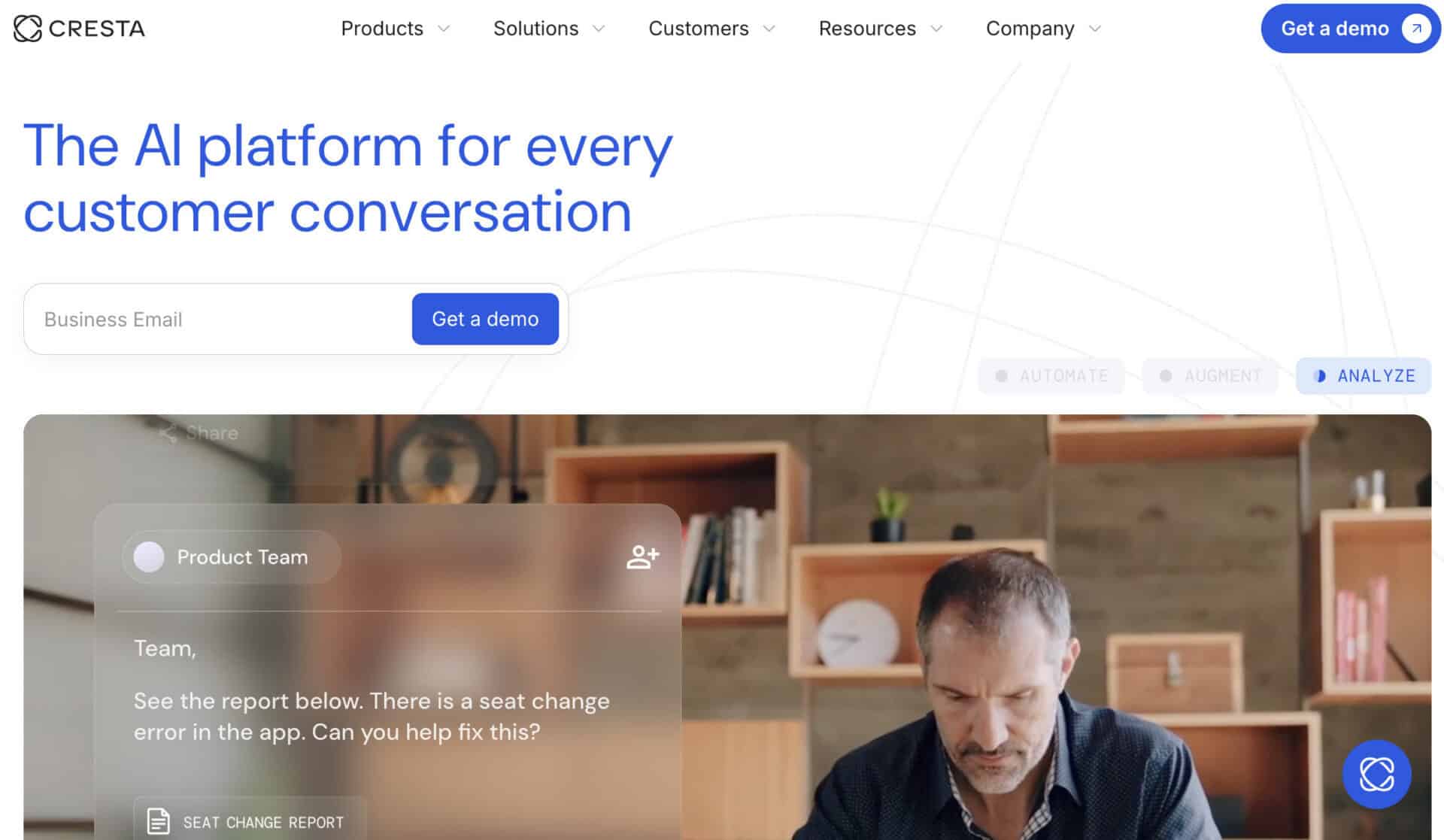
Cresta is an AI-native platform built around real-time agent assist: live coaching prompts and compliance reminders delivered to agents during a call or chat, backed by conversation intelligence and QA scoring underneath. Its customers include United Airlines, Cox Communications, and Marriott, and it holds a 4.2/5 rating on G2 across 43 reviews, with real-time guidance consistently the most praised feature.
Best for: Large enterprises that want agents actively guided in the moment, not just reviewed after the fact.
Worth knowing: Cresta doesn’t publish pricing, but third-party reporting and buyer accounts put typical deployments at $60,000–$150,000 a year with 50–100 seat minimums and annual contracts: squarely enterprise territory. Reviewers also flag transcription drift on heavy accents as the most common limitation.
Pricing: Custom; typically $60K–$150K/year based on third-party reporting.
Chattermill is a customer feedback analytics platform that unifies support tickets, surveys, and reviews into one place, using AI to tag themes and track sentiment trends over time. It’s particularly popular with retail, financial services, and travel brands that want one view spanning multiple feedback sources, not just contact centre conversations.
Best for: Teams whose priority is unifying feedback across support, surveys, and public reviews into a single voice-of-customer view.
Worth knowing: Chattermill’s strength is breadth of feedback sources rather than contact-centre-specific depth; real-time anomaly alerts, per-agent QA scorecards, and live conversation monitoring aren’t the core focus the way they are for a dedicated contact centre analytics platform.
Pricing: Custom, enterprise-quoted.
SentiSum is a dedicated customer service analytics tool built around AI tagging and sentiment analysis for support tickets. It reads and categorises tickets automatically, surfacing the themes and pain points driving contact volume, and integrates with major help desks.
Best for: Support teams whose main data source is written tickets and who want automatic tagging without manual categorisation.
Worth knowing: Its scope is support-ticket-first rather than full contact-centre-wide; it’s lighter on voice/speech analytics, live anomaly detection, and QA scoring than platforms built around all conversation channels. Reviewers also note the AI tagging isn’t fully accurate out of the box and needs occasional manual correction.
Pricing: Starts around $1,000/month for a start-up focused plan, scaling with channels, users, and ticket volume.
Level AI is a customer intelligence platform focused on analysing intent and meaning across omnichannel contact centre interactions, and it’s widely used specifically for QA evaluation workflows.
Best for: Teams that want AI-assisted QA scoring across email, chat, and phone in one place.
Worth knowing: Reviewers are generally positive on the QA use case but note occasional delays in evaluation notifications and scoring accuracy that can dip in multilingual environments; worth stress-testing against your own non-English conversation volume before rolling out widely.
Pricing: Custom, enterprise-quoted.
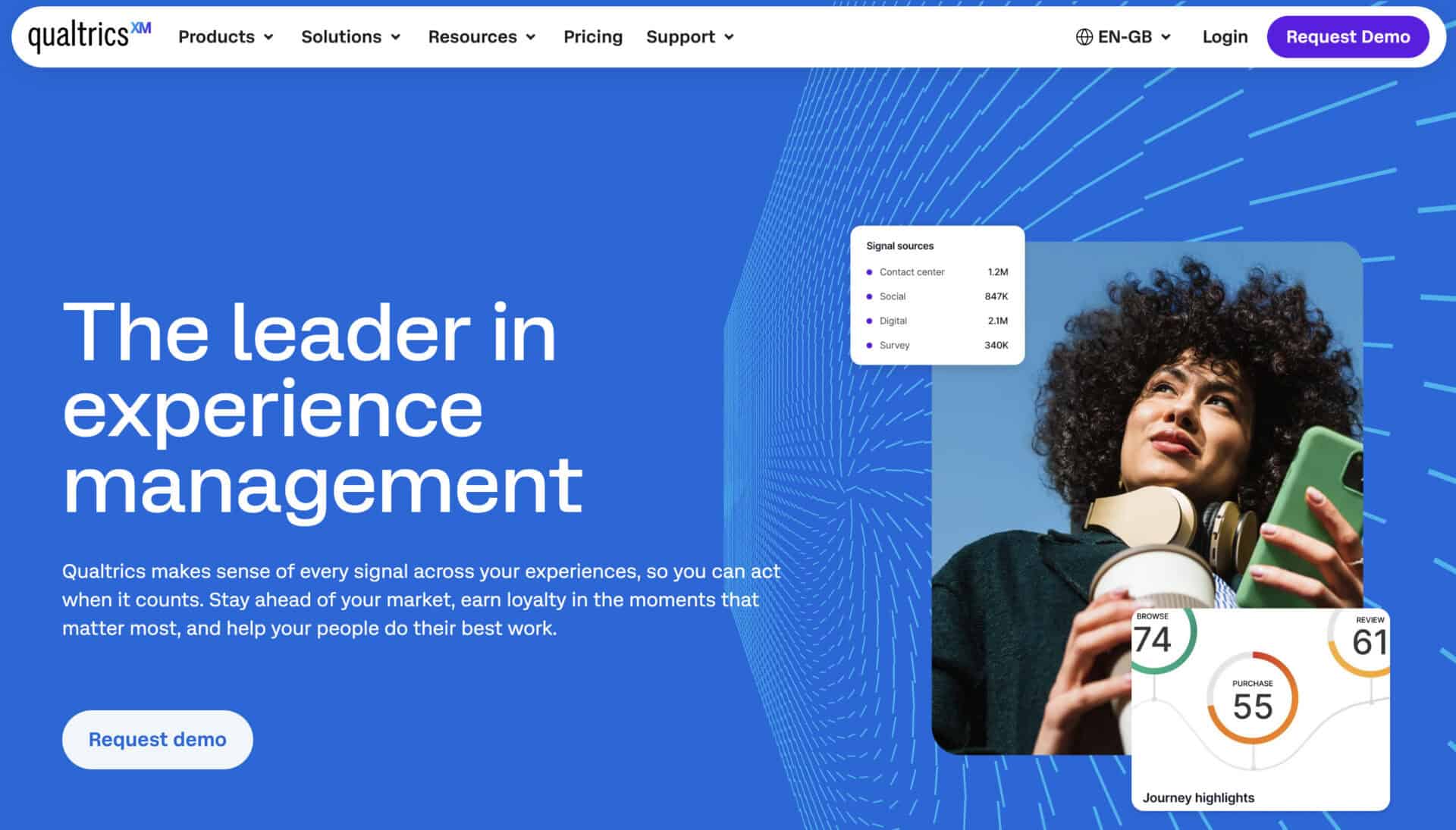
Qualtrics is a large-scale experience management platform, and its XM Discover engine (built on the Clarabridge text analytics technology it acquired in 2021) reads survey responses, chat, and call transcripts across more than 150 industry-specific models and 23 languages. It’s designed for enterprises running structured, company-wide voice-of-customer programmes, not just contact centre teams.
Best for: Large organisations running formal VoC programmes across the entire customer journey, not just support interactions.
Worth knowing: Reviewers consistently point to a steep learning curve and a long rollout, often weeks to months, and frequently requiring outside consultants to get a programme live. Public estimates suggest typical spend runs into the tens of thousands of dollars a year, which makes it a heavy lift for a team that just wants contact centre-level insight rather than an enterprise-wide XM programme.
Pricing: Custom, quote-based; public estimates suggest a median spend in the tens of thousands per year.
If you’re only picking one: most of the alternatives above do one piece of this well – real-time detection, or QA, or feedback analytics – and leave you stitching the rest together with other tools. EdgeTier is the one platform on this list built to do all three at once, on 100% of your conversations, in real time, across the channels and languages a modern contact centre actually runs on, which is why it’s the strongest all-round pick for most teams reading this. If we do say so ourselves!
Want to see EdgeTier in action? Access our sandbox HERE.
Speech analytics specifically refers to analysing voice conversations; transcribing calls and extracting sentiment, keywords, and compliance flags. Call center analytics is the broader category, covering speech analytics plus text-based channels (chat, email, social), workforce data, and customer journey analysis.
Manual sampling (usually 1–2% of interactions) is faster to set up but misses most issues; a problem affecting 5% of your contacts can easily go unnoticed in a 2% sample. Full-coverage tools like EdgeTier, CallMiner, and Observe.AI analyse every conversation, which matters most if you’re trying to catch emerging issues early rather than just audit after the fact.
It varies hugely by vendor type. Ticket-focused tools like SentiSum start around $1,000/month for start-up packs. Full CCaaS platforms like NICE quote limited tiers from roughly $110/agent/month before analytic extras are added. Enterprise platforms (CallMiner, Verint, Cresta, Qualtrics) are custom-quoted and commonly run from the tens of thousands to well over $100,000 a year depending on volume and scope.
This is one of the biggest differentiators in the category. Some platforms can be live within days once connected to your existing channels (hi EdgeTier!). Enterprise speech analytics suites can take months, CallMiner reviewers cite roughly five months to full deployment, for example, so it’s worth asking any vendor directly rather than assuming based on price alone.
Coverage varies significantly. EdgeTier analyses conversations in 49+ languages as standard, and Qualtrics’ XM Discover supports 23. Several other platforms are strongest in English and see accuracy drop off in other languages or with strong accents; a pattern reviewers flag repeatedly for tools built primarily around English-language voice transcription. If you run multilingual support, test this specifically rather than taking it for granted.
No, for most vendors on this list (EdgeTier, CallMiner, Observe.AI, Cresta, SentiSum, Chattermill, Level AI, Qualtrics), analytics sits on top of whatever phone, chat, and ticketing systems you already use. NICE CXone and similar full-stack CCaaS platforms are the exception, bundling analytics into the same system that also handles routing and calls.
At minimum: contact drivers (why people are getting in touch), sentiment and emotion trends, and agent-level QA scoring. More advanced platforms go further with predictive metrics like likely CSAT or customer effort before a survey is even sent, root-cause breakdowns rather than just symptom tracking, and recommended actions rather than raw numbers. It’s worth checking whether a tool’s reporting is purely descriptive (“here’s what happened”) or whether it points toward what to actually do about it; that gap is often bigger between vendors than the dashboards themselves suggest.
This varies enormously by vendor size and pricing tier. Enterprise platforms often provide a dedicated account team, implementation specialists, and regular check-ins as standard; EdgeTier, for example, assigns each customer a named account and implementation team with meetings roughly every two weeks. Lighter or self-serve tools may rely more on documentation and ticket-based support. Neither model is automatically better, but it’s worth clarifying upfront whether “support” means a help centre or a person who knows your account.
It varies more than feature lists suggest. Some platforms work almost entirely out of the box (useful for speed, but limiting if your contact reasons, QA criteria, or alert thresholds are unusual.) Others require heavy configuration (or a vendor’s professional services team) before they’re useful at all. The better question to ask any vendor isn’t “can it be customised?” but “who does the customising, and how long does it take?” A platform that lets your own team tweak topics, QA questions, and alert triggers directly is a very different buying decision from one where every change goes through a support ticket.
Most of what we hear on customer calls is useful. Some of it is just lovely. We've rounded up the
From self-serve Sonar anomaly models to a smarter, shareable Ask Spotlight and a fully transparent QA dispute process, here's everything
EdgeTier turns your customer conversations into a single connected system: it catches anomalies before they escalate, scores every agent interaction


Giovane Nicolau Junior
Head of Operations Performance
"EdgeTier is really shining when it comes to responsible gambling. We can proactively track critical issues and take actions, reducing human error."


James Waghorn
Director of Customer Contact
"EdgeTier is no ordinary software product... It has completely changed how we work at CarTrawler."


Debbie Duggan
Contract Manager for Customer Solutions
"We thought at the time that we were putting the customer at the fore. We thought we were doing things right. But in hindsight, we really weren’t because we had no real-time insights whatsoever into customer issues."



Let us help your company go from reactive to proactive customer support.
Unlock AI Insights