Overheard at EdgeTier
Most of what we hear on customer calls is useful. Some of it is just lovely. We've rounded up the
Poor customer visibility rarely looks like a data problem. It shows up as rising contact volumes, endless manual analysis, failing self service, and teams reacting instead of acting. When organisations can’t clearly see why customers are contacting them, small issues turn into persistent cost, wasted effort, and avoidable frustration. This article breaks down the true…


| Poor customer visibility rarely looks like a data problem. It shows up as rising contact volumes, endless manual analysis, failing self service, and teams reacting instead of acting. When organisations can’t clearly see why customers are contacting them, small issues turn into persistent cost, wasted effort, and avoidable frustration. This article breaks down the true cost of poor customer visibility, how it compounds across operations, customer experience, and risk, and why clear, real time insight into customer demand is a prerequisite for fixing problems rather than absorbing them. Here’s what you’ll learn: ✔ What “poor visibility” actually looks like inside contact centres and CX teams ✔ How hidden failure demand drives repeat contact and unnecessary cost ✔ Why manual categorisation and slow insight cripple decision making ✔ The customer impact of unseen issues on effort, CSAT, and loyalty ✔ Why AI, automation, and self service fail without reliable visibility into customer intent |
It always starts the same way.
Contact volumes tick upward. Not dramatically, just enough to raise eyebrows. Someone wonders if it’s seasonal. Another person suspects a recent policy change. An analyst gets tasked with figuring it out.
Days later, they come back with…well, not much. Maybe a spike in one or two categories, but the tagging’s too messy to be sure. They’ve reviewed a sample, floated some theories. Nobody’s confident about anything.
And that’s it. The organisation moves on.
This is what poor customer visibility actually looks like. Not chaos. Not crisis. Just persistent, expensive uncertainty.
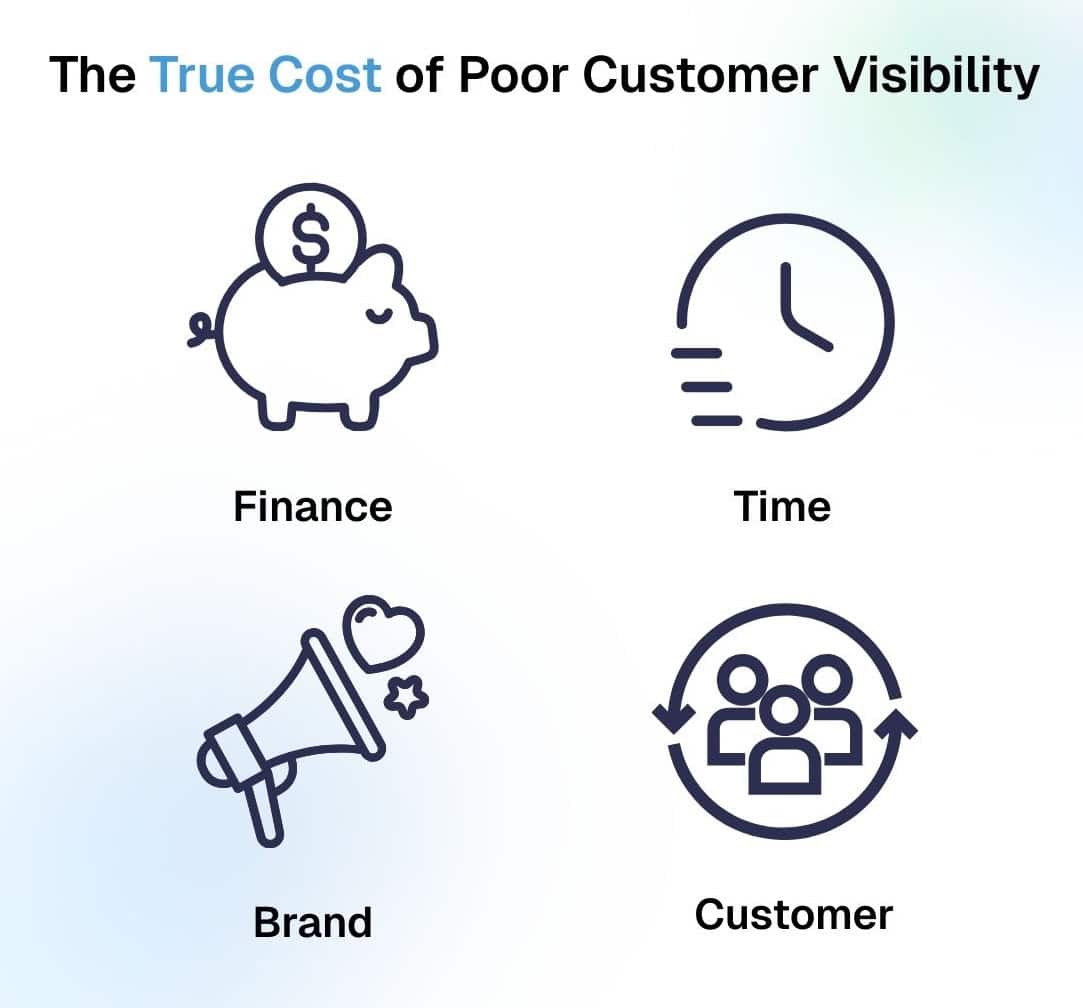
Most organisations think they know why customers contact them. They have dashboards, reports, categories. Then something shifts; volumes spike, complaints climb, self-service falls flat, and that confidence evaporates. Teams scramble with manual analysis, lean on experience, and trust their dreaded guts!
The cost? It compounds everywhere.
Repeat contacts are the canary in the coal mine. A customer reaches out. The issue doesn’t get truly resolved. They contact again. Maybe they switch channels. Maybe they retell their story to three different agents. Lather. Rinse. Repeat.
Every one of those interactions costs money. Gartner pegs the median at $1.84 for self-service, $13.50 for assisted channels. Multiply that by thousands of avoidable contacts weekly, and the numbers get uncomfortable fast.
But here’s the real problem: nobody can clearly see what’s driving them. Without visibility into root causes, demand reduction becomes guesswork. Teams cope with volume instead of eliminating the reasons customers contact in the first place.
The same pattern plays out with broken processes. Every organisation has them: the confusing policy, the brittle system, the journey that falls apart at step four. People know where the pain points are. They just can’t prove the impact.
Without evidence, inefficiency becomes institutional. The workaround quietly becomes “just how we do things here.” Months pass. Costs stack up. Nothing changes.
This lack of clarity eventually warps investment decisions. Roadmaps drift away from actual customer problems. Teams build features that sound good internally while high-effort issues fester. Automation gets layered onto misunderstanding.
Chatbots, IVRs, self-service tools – they fail to deliver ROI not because the technology’s flawed, but because the organisation never truly understood customer intent. Sometimes automation actually increases contact volume. The cycle continues.
Poor visibility doesn’t just burn budget. It devours time at every level.
Analysts spend hours manually categorising conversations. They clean data, review samples, explain spikes that should be obvious. This work is slow, tedious, and soul-crushing. More critically, it traps skilled people in detective mode instead of driving meaningful change.
Managers feel it differently. Operations leads spend their days firefighting and responding to escalations, rerunning reports, chasing explanations for the same recurring problems. Context-switching becomes the job description.
Decision-making grinds to a halt. Simple questions take days to answer:
When insights arrive late, confidence crumbles, teams stop trusting the data, decisions get delayed or made on instinct, and momentum dies.
Here’s the uncomfortable truth: customers feel the impact of poor visibility long before your business does.
When underlying issues go unidentified and unfixed, customers work harder. They repeat themselves and navigate the broken journeys before contacting you multiple times because nothing actually improves.
Zendesk found that 74% of customers get frustrated repeating their story to multiple agents. From their perspective, it feels like you’re not listening.
CSAT scores decline quietly as friction accumulates one interaction at a time. This then causes loyalty to erode long before it shows up in a report. By the time satisfaction metrics trigger alarm bells, the damage is done.
Support interactions are one of the richest sources of customer insight you have. When they’re not analysed effectively, critical signals vanish and emerging pain points go unnoticed. All of the opportunities you could have had to improve onboarding, billing, delivery, account management become lost.
Most customer contact is failure demand. People aren’t reaching out because they want to chat; they’re contacting you because something broke. Without visibility, failure demand grows silently and becomes a permanent tax on both customers and contact centres.
When organisations can’t see problems early, customers surface them elsewhere.
Issues invisible internally often explode publicly first. By the time a trend hits social media, it’s already affected thousands. At that point, you’re not fixing a problem, you’re essentially managing a crisis.
In regulated industries (financial services, utilities, insurance, telecoms) rising complaint volumes introduce genuine operational and financial risk. Regulatory scrutiny intensifies. Compensation obligations balloon. Audits multiply. Trust fractures.
Accenture research shows 87% of customers say a single bad service experience is enough to turn them off a brand entirely. When problems repeat, trust evaporates faster.
Poor customer visibility rarely causes one catastrophic failure.
Instead, it creates dozens of small inefficiencies that compound relentlessly. Costs ultimately creep upward as teams become reactive, thus forcing customers to work harder. The result? Risk multiplies.
What makes this truly dangerous is how normal it feels. Without clear insight, organisations adapt to poor visibility. Manual analysis becomes standard practice. Firefighting becomes routine. And high contact volumes get accepted as inevitable rather than preventable.
Visibility isn’t about prettier dashboards. It’s operational leverage. It lets teams see what’s actually happening in time to do something about it.
If this sounds familiar, you’re not alone. Watch our webinar to hear how other teams have turned this around.
EdgeTier Co-Founder and CCO Bart Lehane joins Vladimir Greavu, Founder of Tweak.ist and former Head of Customer Care at Berlin Brands Group and Vivid Money, explore what happens when customer signals stay hidden.
Vladimir shares firsthand experiences from fast-scaling teams where fragmented data and inconsistent tagging made visibility both urgent and elusive. Together, they unpack the operational, financial, and customer impacts of not seeing issues early, and how modern analytics and AI can flip the equation.

Most of what we hear on customer calls is useful. Some of it is just lovely. We've rounded up the
From self-serve Sonar anomaly models to a smarter, shareable Ask Spotlight and a fully transparent QA dispute process, here's everything
EdgeTier turns your customer conversations into a single connected system: it catches anomalies before they escalate, scores every agent interaction


Deborah Guivisdalsky
COO
"We now have highly detailed understanding of agent performance, not just on key agent metrics, but also on how customers react to our agents and the emotions of our customers feel when talking to our team."


Nick Brazitis
Global Customer Care Manager
"The anomaly feature is a game changer for us. It’s highly accurate and has helped us identify customer issues, agent errors, and even fraud that would have taken us longer to catch."


Vladimir Greavu
BBG Director of Customer Service
"I specifically liked the flexibility. I liked the can-do attitude. I always felt supported. There hasn’t been any single point in our journey where EdgeTier has said no."



Let us help your company go from reactive to proactive customer support.
Unlock AI Insights