
Your Contact Centre’s Lack of Visibility is Causing an Experience Gap
The Experience Gap is real, and it’s being made worse by your lack of visibility. The good news is we
This article originally appeared on Edge Signals – Bart Lehane’s LinkedIn newsletter on customer experience, analytics, and AI. Follow for future insights like this!As AI adoption accelerates, the financial impact of a single CSAT point has never been higher. This article explores the "Magic CSAT Number" – the specific threshold where customer satisfaction converts into…


| This article originally appeared on Edge Signals – Bart Lehane’s LinkedIn newsletter on customer experience, analytics, and AI. Follow for future insights like this! As AI adoption accelerates, the financial impact of a single CSAT point has never been higher. This article explores the “Magic CSAT Number” – the specific threshold where customer satisfaction converts into a 30% increase in revenue. We examine how high-stakes moments and conversation intelligence allow CX teams to move customers from “middling” scores to high-value loyalty. You’ll learn: ✔ Why one point on a CSAT scale is worth 30% more spend. ✔ Why moving “5s and 6s” to “7s” outperforms chasing perfect 10s. ✔ Using AI to analyze 100% of interactions vs. 10% of surveys. ✔ How to turn friction points into compounding revenue advantages. |
In the world of Customer Experience, CSAT is often treated as a “soft” metric, a number we glance at on a monthly dashboard to ensure things aren’t on fire. But when you map satisfaction directly to spending habits, the data tells a much more aggressive story.
Recently, a company I was speaking with analysed their customer spend against CSAT survey scores. They discovered a definitive tipping point: customers who rated their experience a 7 out of 10 or higher spent up to 30% more on average.
This wasn’t a vague correlation. It was a specific threshold. Once a customer crossed that one-point gap on a ten-point scale, their economic behavior fundamentally changed.
When you view CSAT through the lens of revenue, it stops being a service KPI and becomes a growth lever.
Most organisations fall into the trap of trying to turn “7s” into “9s.” While a 9/10 looks great on a slide deck, it rarely yields the same ROI as moving a customer from the “middling” range into the “loyalty” range.
The real value lies in the “5s” and “6s”, or the customers who feel the service was “just fine.” By moving them from “fine” to “good,” you unlock:
That 7/10 threshold isn’t universal. The “Magic Number” varies by industry:
The challenge? Most companies can’t find their number because survey data is fundamentally broken. With response rates often hovering below 10%, you only hear from the “very happy” or the “very angry.” You are building a growth strategy on a fraction of the data.
This is where AI-driven conversation intelligence changes the game. Instead of guessing based on a few surveys, you can analyse 100% of customer interactions. By identifying the specific friction points that keep customers in that “5-6” range, you can systematically push them over the threshold.
Case Study: Electric Ireland During the energy crisis, Electric Ireland saw CSAT drop to unprecedented levels. By using EdgeTier to gain real-time visibility into 100% of conversations, they spotted emerging issues weeks faster than traditional reporting allowed.
The Result? A 21% improvement in CSAT and a 19% improvement in First Contact Resolution (FCR).
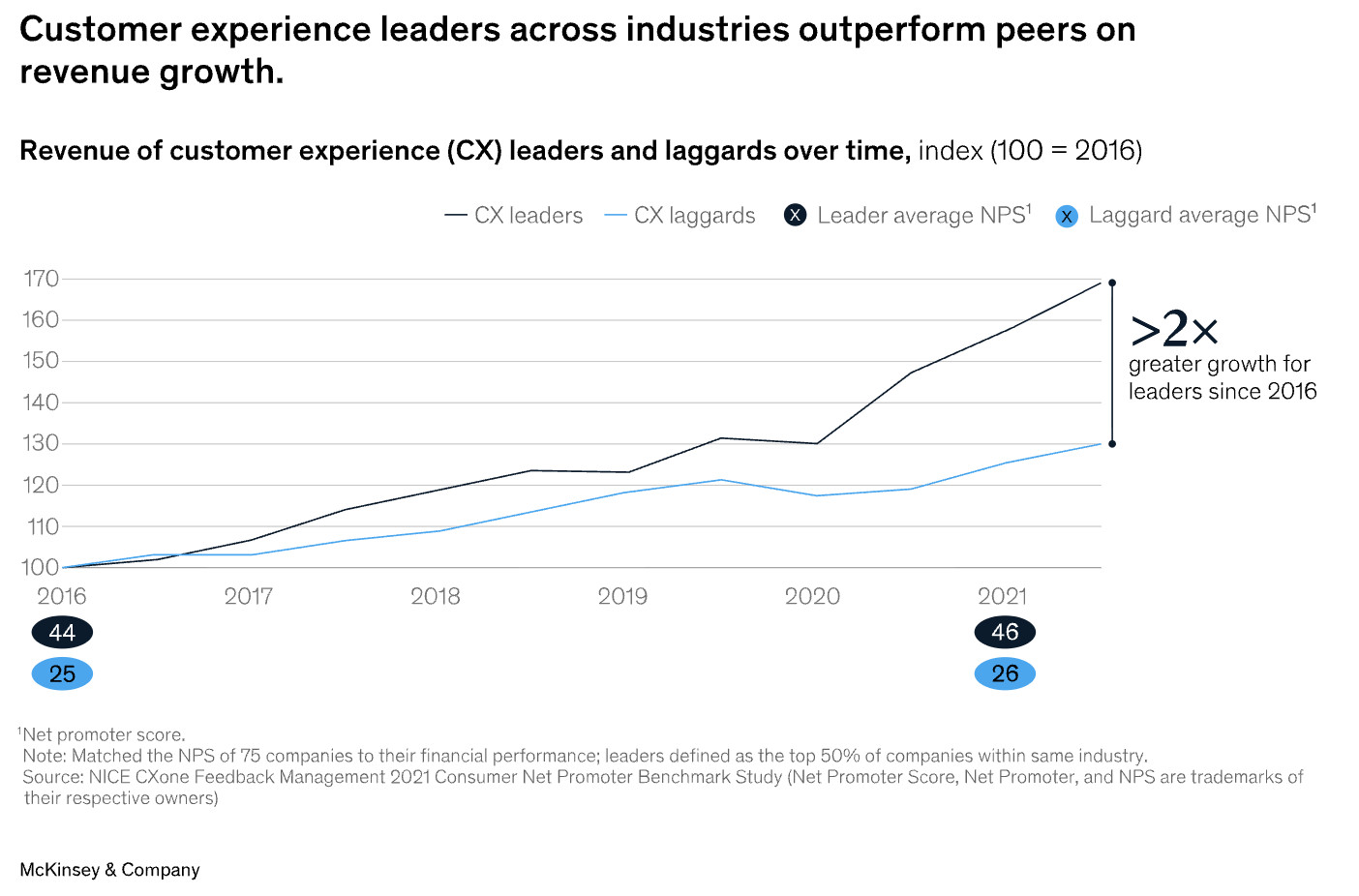
The financial incentive is backed by global data. McKinsey research shows that CX leaders have outperformed laggards by more than 2x in revenue growth since 2016. In a market where products are commoditised and price is a race to the bottom, Customer Experience is the only compounding advantage left. The winners aren’t those chasing “perfect” scores; they are the ones making CX operational.
If you are leading a contact center or CX team, you need to move beyond the dashboard. Ask yourself:
“Do I know the specific CSAT score that changes behavior in my business?”
Once you identify that tipping point, you stop chasing improvement for the sake of it. You start targeting the customers closest to the edge and fixing the specific friction points holding them back.
If one point on a scale is worth 30% more revenue, it’s time to stop looking at CSAT as a metric and start looking at it as an investment.
🔗 Read the full article on Bart Lehane’s LinkedIn post for examples, stories, and community discussion.
Bart Lehane is the Co-founder & CCO at EdgeTier and a PhD engineer who’s spent 20+ years building and delivering advanced technology. His background spans applied research, software development, and product management. His interests lie at the intersection of CX, AI, and tech.
The Experience Gap is real, and it’s being made worse by your lack of visibility. The good news is we
This article originally appeared on Edge Signals – Bart Lehane’s LinkedIn newsletter on customer experience, analytics, and AI. Follow for
Customer churn doesn’t start with lost sales, it starts in conversations.Refund friction, unresolved issues, confusing policies, and low-empathy responses quietly


James Waghorn
Director of Customer Contact
"EdgeTier is no ordinary software product... It has completely changed how we work at CarTrawler."


Robert Davies
Consultant
"You’ve got an issue, but you don’t know how many people are affected. You don’t know the scale. You don’t even know if it’s real."


Deborah Guivisdalsky
COO
"We now have highly detailed understanding of agent performance, not just on key agent metrics, but also on how customers react to our agents and the emotions of our customers feel when talking to our team."



Let us help your company go from reactive to proactive customer support.
Unlock AI Insights